
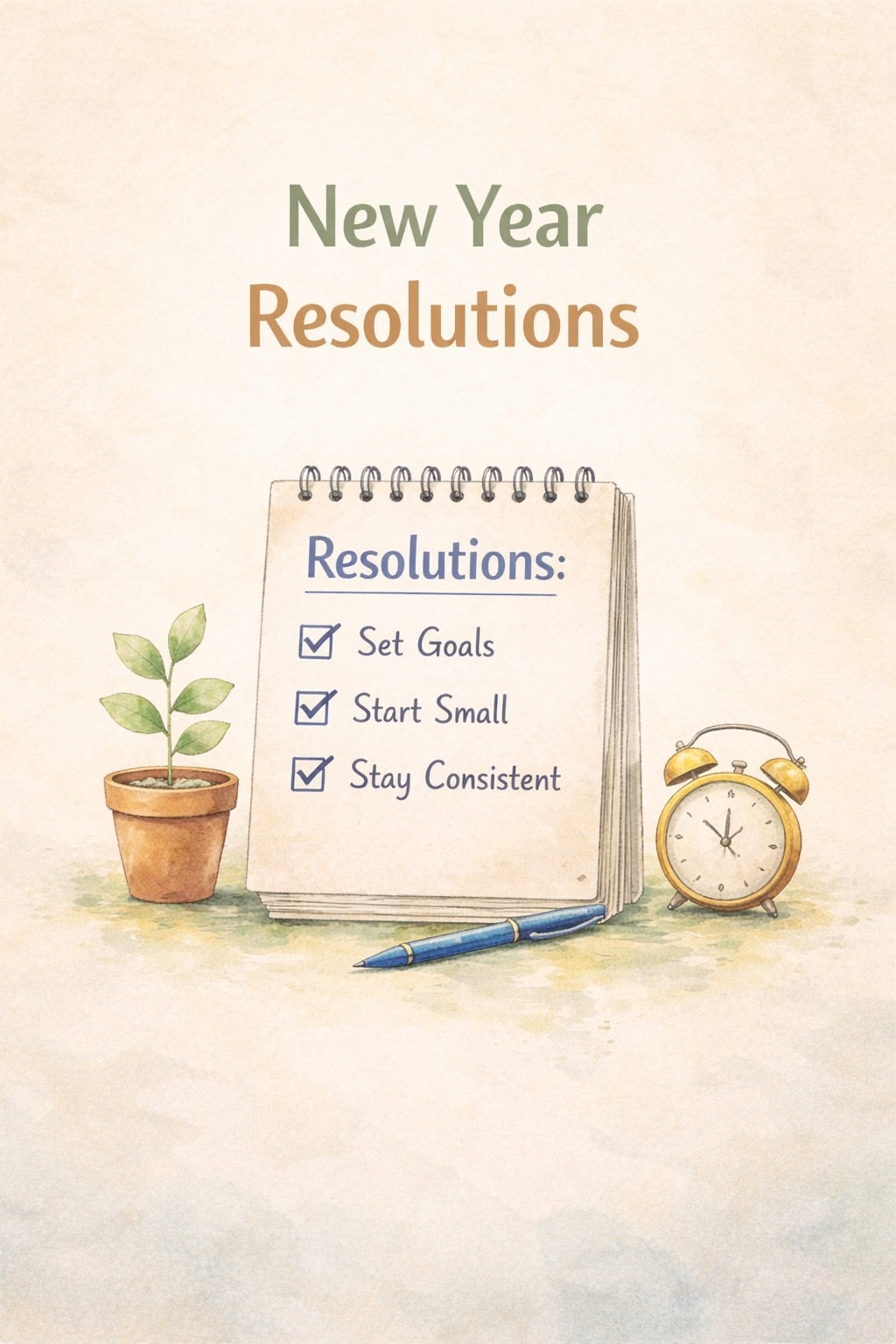
As the New Year rolls around, many of us get resolutions, hopeful for a fresh start. Yet, research shows that up to 95% of these resolutions fail. Why? Often, it's because we focus on the wrong goals or approach them in ways that set us up for frustration and failure. This year let's break that cycle by adopting strategies that help us create resolutions that truly stick.
To create successful New Year's resolutions, it's helpful to combine the SMART and NICE goal-setting frameworks. SMART goals are Specific, Measurable, Achievable, Relevant, and Time. NICE goals focus on the process and include Near-term, Input-based, Controllable, and Energizing actions.
Near-Term Goals: Building Momentum
Near-term goals are doable daily or weekly, and input-based goals empower ourselves to take simple actions, like a half-hour walk, instead of focusing on a larger outcome. Controllable goals are under your control, and energizing goals incorporate fun and enjoyment.
Having a System for Success
Having a system to achieve your goals matters. Using a tracker to measure progress on NICE goals can be helpful and encouraging. This can be done using note-taking apps or paper calendars. Review and adjust your goals weekly, and take time each quarter to adjust them as needed.
Implementation Intentions
In addition to SMART and NICE goals and tracking, implementation intentions are also a helpful strategy. This involves specifying the conditions under which you will engage in goal-directed behaviors. For example, specifying when, where, and how one will act on a highly specific plan increases self-efficacy, making the goals seem more achievable.
A study on physical activity found that personalized planning interventions increased physical activity and confidence in achieving physical activity goals, even under time constraints. The study participants were given instructions to plan how, where, and when they would add their physical daily activities using personalized schedules and maps.
Integrating Goals with Daily Life
This illustrated how implementation intentions training can help overcome the intention-behavior gap by addressing intention viability, activation, and elaboration. Intention viability is strengthened by finding doable actions, intention activation is improved by integrating goals with daily tasks, and intention elaboration is achieved by specifying the when, where, and how of goal achievement.
The Power of Self-Compassion
Self-compassion is another key factor in achieving goals. Instead of acting like a "personal drill sergeant" and shaming yourself, approach your resolutions with self-compassion. When it comes to exercise, for example, think about what kind of movement feels kind to your body.
Self-compassion can be seen as a meta-resolution that makes all other resolutions easier. It is important to be kind to yourself, and when you are compassionate with yourself you are more likely to eat healthier and continue with a hard project after setbacks.
Self-compassion can boost well-being on its own, and it allows you to meet your goals, not procrastinate, and not be worried about failure. This year, ditch the guilt-driven resolutions and embrace a kinder, smarter approach.
Key Strategies Summary
To make your New Year's resolutions stick:
- Use SMART goals (Specific, Measurable, Achievable, Relevant, Time-bound)
- Implement NICE goals (Near-term, Input-based, Controllable, Energizing)
- Create implementation intentions with specific when/where/how plans
- Track progress weekly and adjust quarterly
- Practice self-compassion throughout the journey
- Focus on systems and processes, not just outcomes
- Make goals energizing and enjoyable, not punishment-based
Moving Forward
Remember, the goal isn't perfection, it's progress. By approaching your resolutions with evidence-based strategies and self-compassion, you set yourself up for sustainable change rather than another cycle of guilt and disappointment.
This year, give yourself the gift of realistic, achievable goals supported by proven frameworks.